Pothos propagation is one of the easiest and most satisfying things you can do with a houseplant. With a pair of clean scissors, a jar of water and a little patience, you can turn one long vine into several new plants, for free. This guide shows you exactly where to cut, how to root cuttings in water or soil, when to move them into a pot, and what to do if your cuttings turn yellow or start to rot.
Quick answer: Cut a vine just below a node (the small bump where a leaf and root grow), keep two to four leaves on a 4 to 6 inch (10 to 15 cm) cutting, and place the node in water or moist soil in bright, indirect light. Roots usually appear in a few weeks.
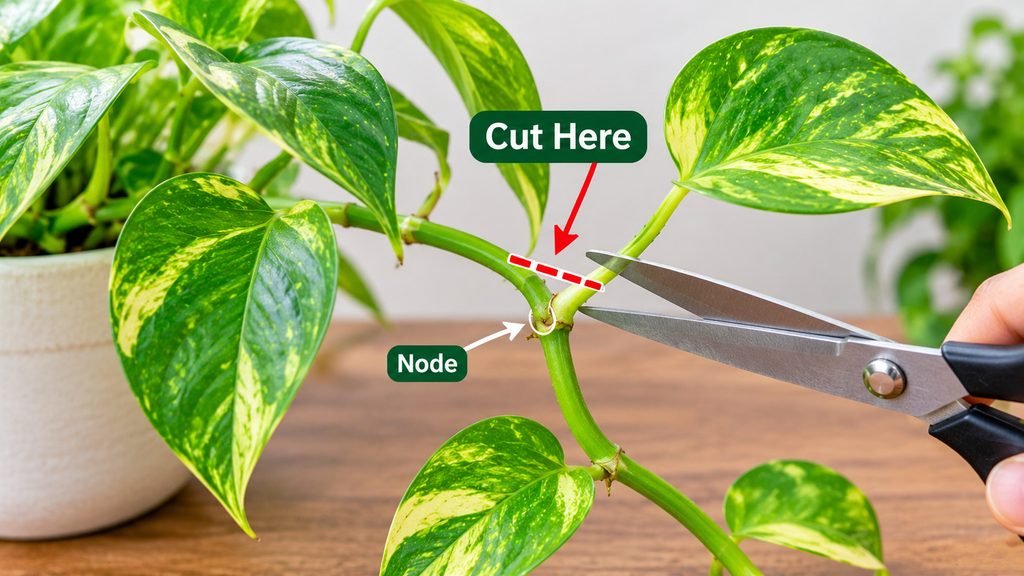
Pothos Propagation at a Glance
- Choose a healthy vine from a mature plant.
- Find the nodes. They are the small brown bumps along the stem.
- Cut just below a node, making a cutting 4 to 6 inches (10 to 15 cm) long with 2 to 4 leaves.
- Remove the lowest leaf, so no leaf sits under the water.
- Root it in a jar of water, or plant it in moist, well-draining soil.
- Place it in bright, indirect light, away from direct sun.
- Wait for roots, usually a few weeks.
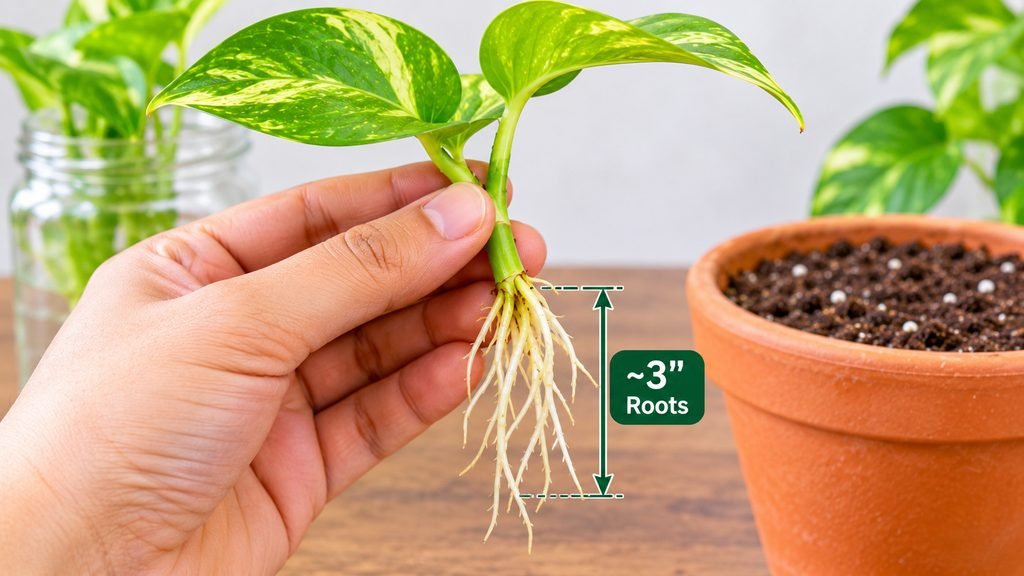
- Pot it up once water roots are 2 to 3 inches (5 to 8 cm) long.
What You Need Before You Start
- A healthy, growing pothos with long vines.
- Sharp, clean scissors or pruners (wipe the blades with rubbing alcohol first).
- A clear glass jar or bottle for water rooting. A clear jar lets you watch the roots.
- Room-temperature water.
- A small pot with drainage holes and a well-draining potting mix, if you are rooting in soil.
- Optional: rooting hormone. Pothos roots easily without it.
Where to Cut Pothos for Propagation
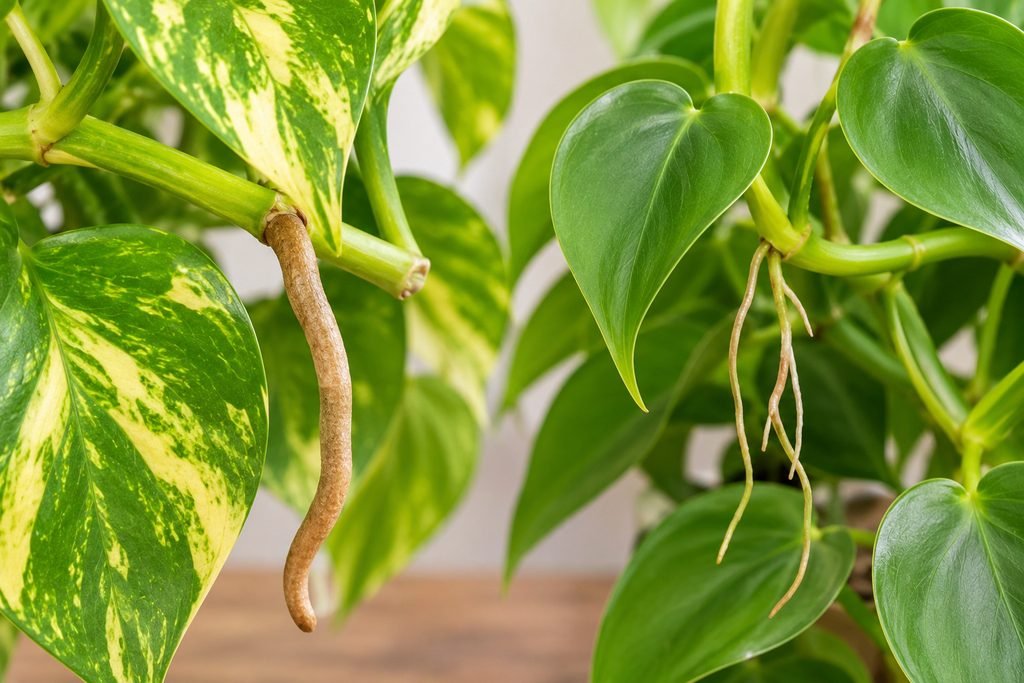
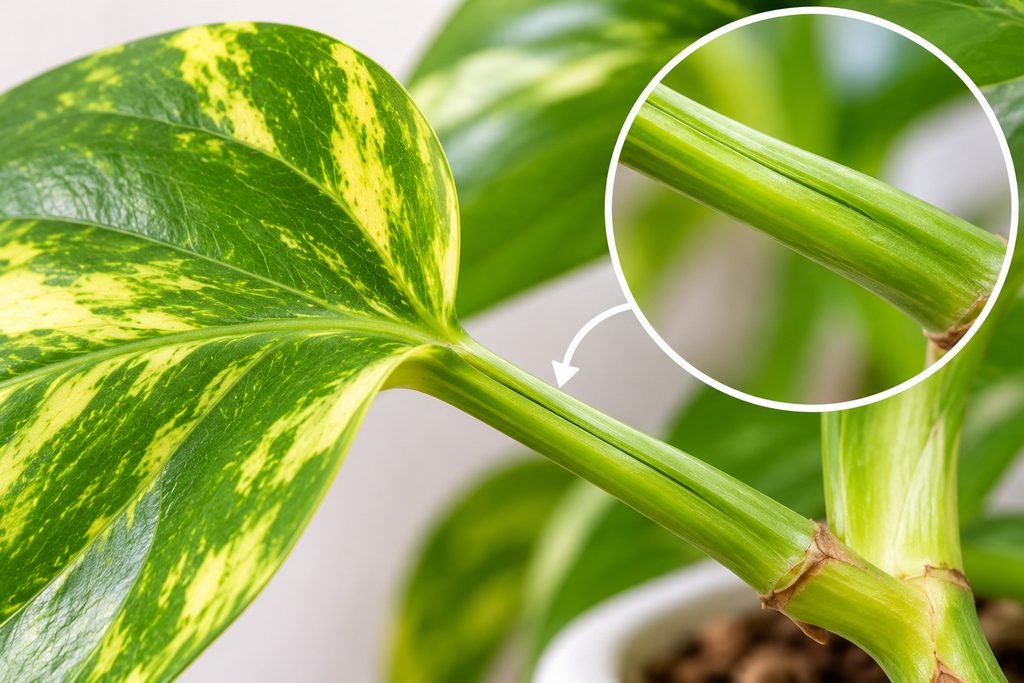
The most important rule in pothos propagation is to include a node. A node is a small bump on the stem, usually where a leaf joins the vine. It is also where the aerial roots grow from. Without a node, a cutting cannot make roots or new growth.
How to cut:
- Look along the vine and find a node with a leaf attached.
- Cut about 1/4 inch (6 mm) below the node.
- Make the cutting 4 to 6 inches (10 to 15 cm) long, with 2 to 4 leaves and at least 2 nodes if possible.
- Pull off or snip the lowest leaf, so the bottom node is bare and ready to go in water or soil.
The best time to take cuttings is spring and summer, when the plant is growing fast. You can propagate in other seasons, but rooting is slower.
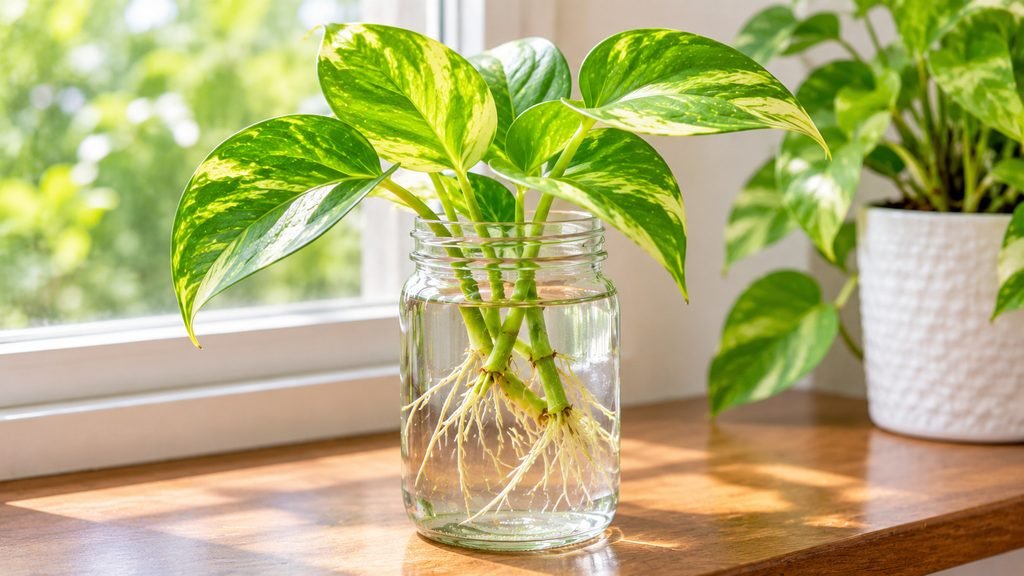
How to Propagate Pothos in Water, Step by Step
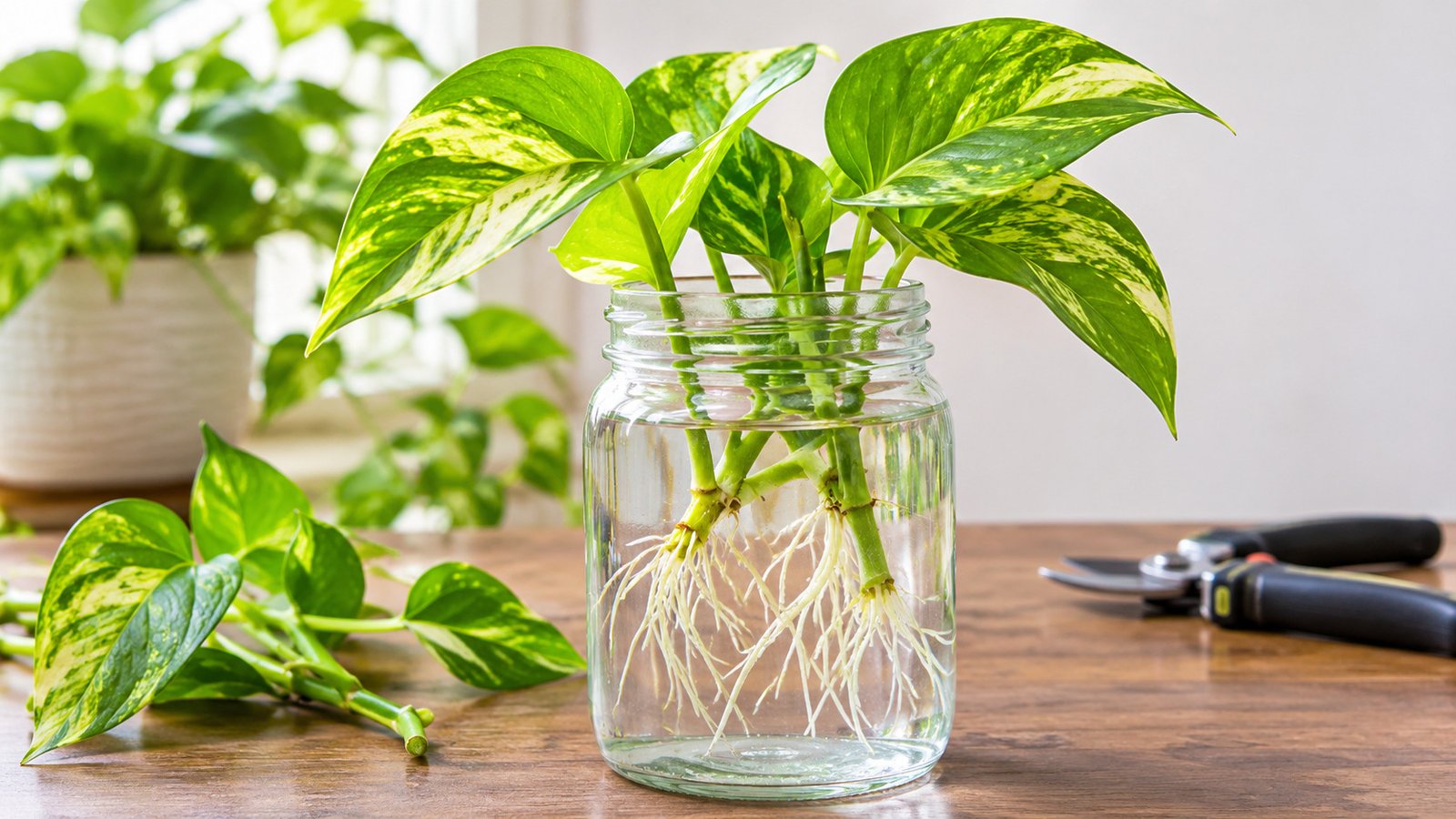
- Fill a clear jar with room-temperature water.
- Place the cutting so that the bare node or nodes are under the water and the leaves stay above it.
- Put the jar in bright, indirect light. Avoid direct sun, which can overheat the water and encourage algae.
- Change the water every week or two, or sooner if it looks cloudy. Fresh water keeps the roots healthy.
- Wait. Small white roots often appear in one to three weeks. It can take longer in cool rooms or dim light.
- Let the roots grow to about 2 to 3 inches (5 to 8 cm) before potting, as explained below.
If you want a plant that looks full from the start, root several cuttings in the same jar.
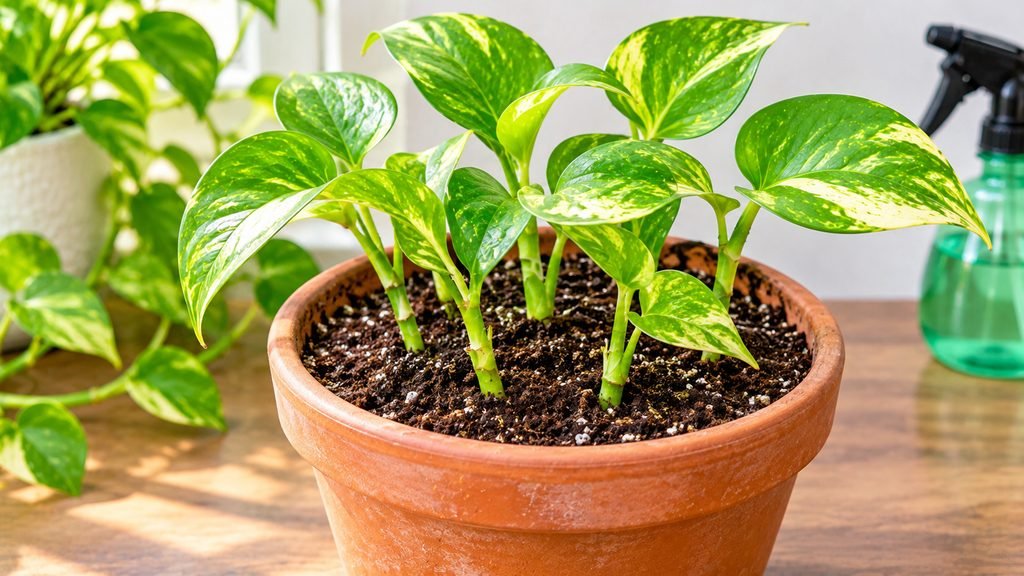
How to Propagate Pothos in Soil
You can skip the jar completely and root cuttings straight in soil.
- Fill a small pot with a light, well-draining mix and moisten it.
- Make a hole with a pencil and insert the cutting so at least one node is below the soil.
- Firm the soil gently around the stem. For a fuller plant, use 3 to 5 cuttings in a 6 inch (15 cm) pot.
- Keep the soil lightly moist, not soggy.
- Place the pot in bright, indirect light.
- Wait for roots. This usually takes several weeks. A gentle tug that meets resistance, or new leaf growth, means roots have formed.
Water or Soil: Which Is Better?
Both methods work. The best pothos propagation method depends on what you prefer.
| Which is Better | Water | Soil |
| Easy to watch roots | Yes | No |
| Needs transplanting late | Yes | No |
| Risk of rot | Higher if the water is not changed | Higher if the soil is too wet |
| Good for | Beginners and kids who like to see roots | A faster move to a long-term pot |
Water roots are a little different from soil roots, so plants moved from water to soil may need a short adjustment period. Cuttings rooted directly in soil skip that step.
When and How to Move Pothos Cuttings From Water to Soil
Wait until the roots are about 2 to 3 inches (5 to 8 cm) long. Very short roots can struggle after the move.
- Use a pot with drainage holes and fresh, well-draining potting mix.
- Plant the cutting so the roots are covered and the lowest node is under the soil.
- Water lightly and keep the soil evenly moist, not wet, for the first few weeks.
- Give bright, indirect light. A few drooping leaves in the first week are normal.
- Hold off on fertilizer for the first month.
Once new leaves appear, you can switch to a normal pothos routine. Let the top 1 to 2 inches (2.5 to 5 cm) of soil dry between waterings.
Common Pothos Propagation Problems and Fixes
Most problems come from rot, poor light or the wrong cut. Here is how to fix them.
Cuttings Turning Yellow
A yellow leaf on a new cutting is common. The usual causes are a leaf sitting under the water (remove it), strong direct sun, very low light, or an older leaf that is simply giving up its energy to the rest of the cutting. Remove yellow leaves, change the water and move the cutting to bright, indirect light. If the whole cutting turns yellow and soft, look for rot (see below).
Roots or Stems Turning Brown or Black
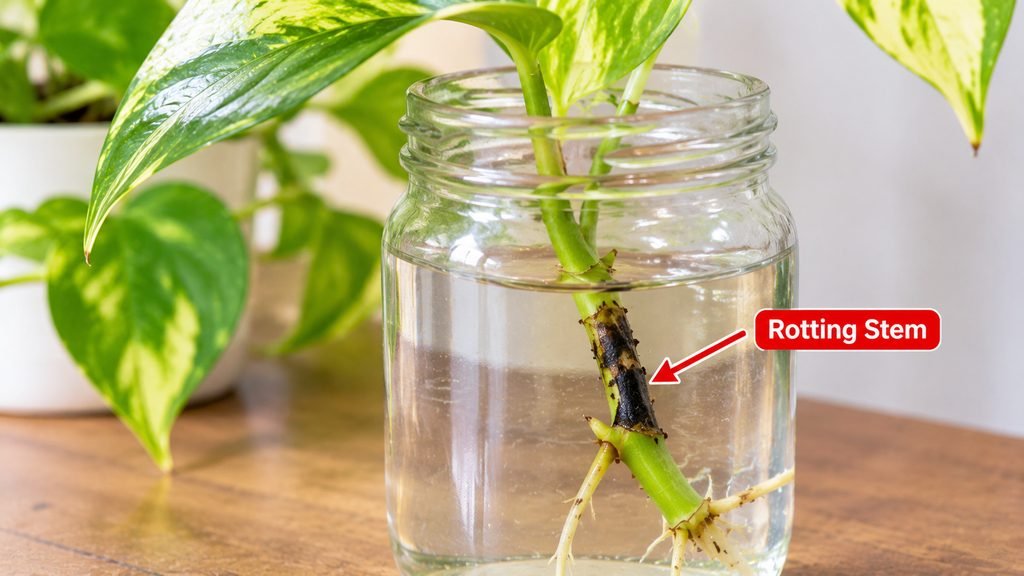
Black, mushy or slimy stems, cloudy water or a bad smell mean rot. To rescue the cutting:
- Take it out and rinse it.
- Cut off the rotten part, going back to firm, green tissue that still has a node.
- Wash the jar and use fresh water.
- Change the water more often from now on.
Cuttings in soil rot when the soil stays too wet, so let the top layer dry slightly between waterings.
Cuttings Not Rooting
If nothing is happening after several weeks, check these:
- No node. A cutting without a node will not root properly.
- Too cold. Rooting slows down in cool rooms. Aim for normal room temperatures.
- Too little light. Move it to a brighter spot, without direct sun.
- Wrong season. Cuttings taken in winter are slower.
- Not enough time. Some cuttings take longer than others.
Pothos Propagation Without Leaves or Nodes: What Works?
A node is essential. A piece of vine with a node but no leaves can still root in water or soil, though it is usually slower and less reliable than a cutting with a leaf. A piece of stem with no node will not make a new plant. A single leaf with no stem or node may grow a few roots, but it will not grow a new vine. If you have a bare vine with nodes, try it in water and be patient.
Safety Note for Pets and Kids
Pothos propagation is simple, but pothos is toxic to cats and dogs, and the sap can irritate skin and mouths. Keep cuttings, jars and trimmings out of reach of pets and small children, and wash your hands after pruning. For more on pet safety, see our [LINK: Pothos vs Philodendron] guide.
Frequently Asked Questions
How long does it take to propagate pothos?
In warm, bright conditions, roots often appear in one to three weeks, and a cutting is ready to pot a couple of weeks later. It can take longer in cool or dim rooms.
Can pothos live in water permanently?
Yes. Many pothos grow in water for a long time if you change the water regularly. Some growers add a tiny amount of diluted houseplant fertilizer now and then. A plant moved to soil usually grows faster and fuller.
Do I need rooting hormone?
No. Pothos roots easily without it, so it is optional.
Can I propagate any type of pothos?
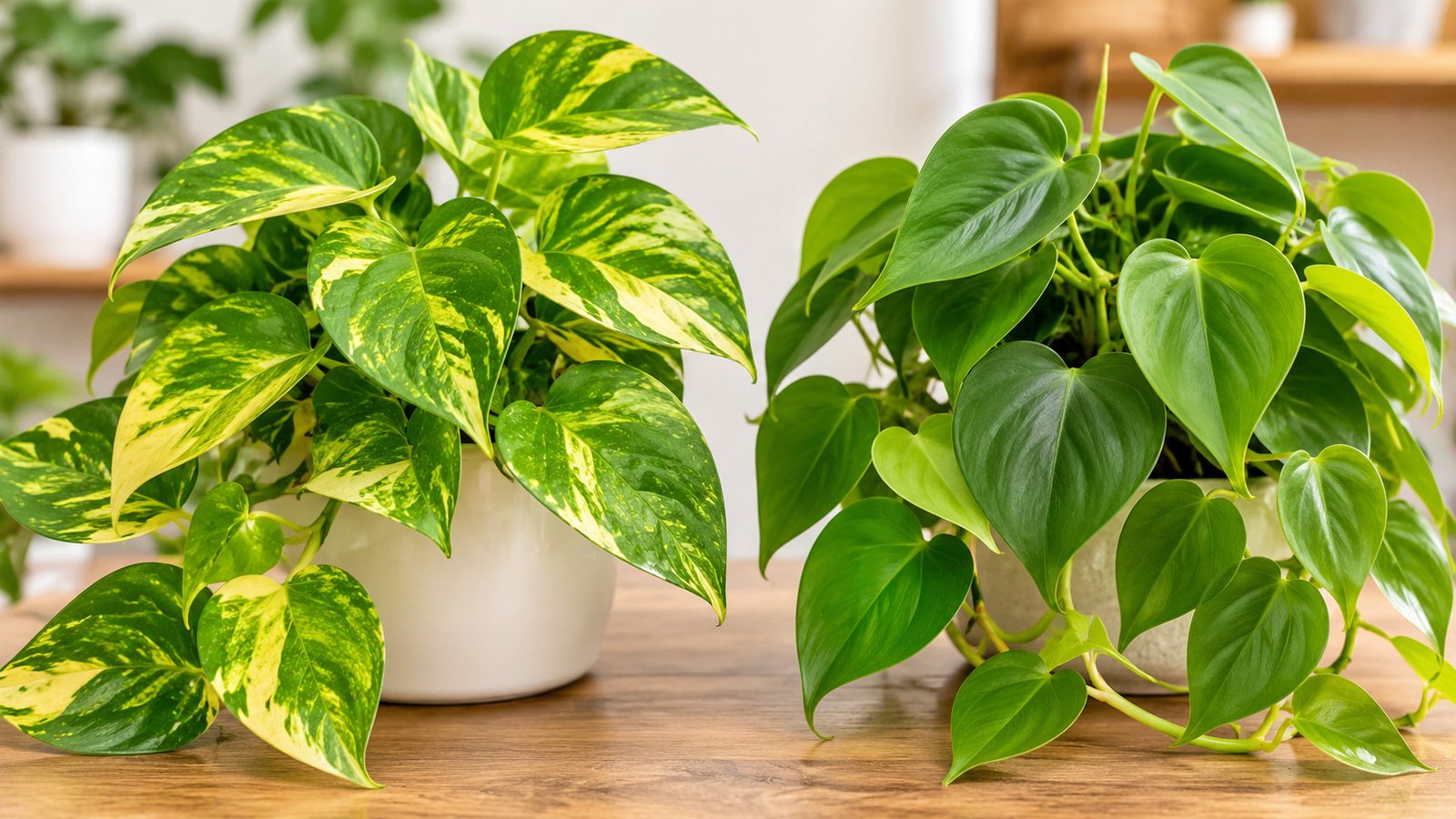
Yes. Golden, marble queen, neon, jade and other types all root the same way. Variegated types need bright, indirect light to keep their patterns.
What is the best time to propagate pothos?
Spring and summer, when the plant is growing actively. Heartleaf philodendron roots the same way, so you can use these steps for it too.
Final Thoughts
Pothos propagation comes down to a few simple rules: cut just below a node, keep the cutting in bright, indirect light, keep the water fresh or the soil lightly moist, and be patient. Within a few weeks you will have healthy new roots, and soon a brand-new plant to keep or share.
Related reading: Pothos vs Philodendron: 5 Easy Ways to Tell the Difference, Best Low Light Indoor Plants and Snake Plant Care