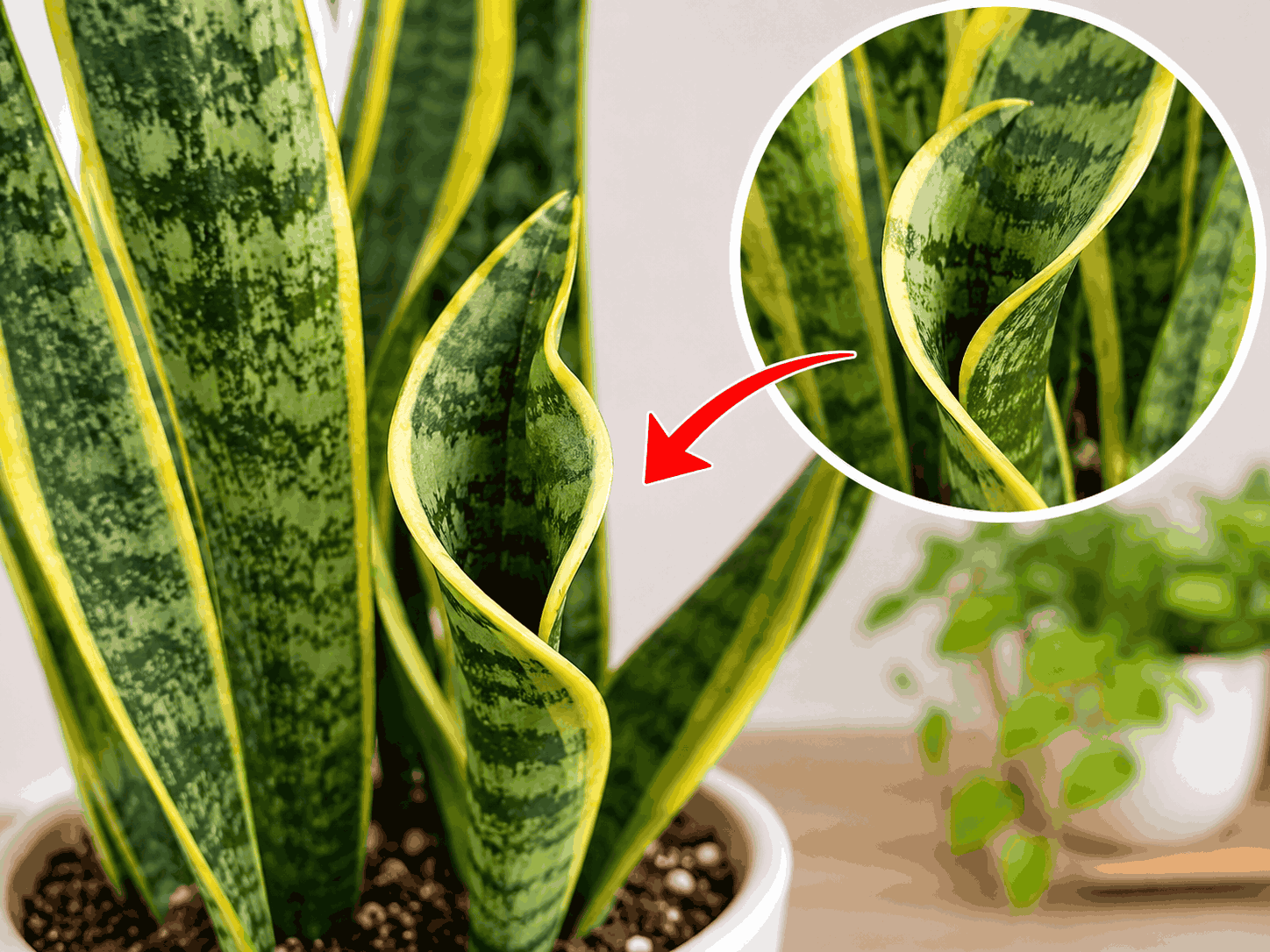
Snake plant leaves curling is one of those problems that makes you stop and stare. This is the plant that is supposed to stand straight and stiff, so a leaf that rolls inward, twists or folds can feel alarming. The good news is that curling is usually a clear message about water, light, temperature or pests, and most cases can be fixed. The trick is reading which way the leaf is curling, because each pattern points to a different cause.
Quick answer: Leaves that roll inward and look thin and wrinkled usually mean the plant is thirsty. Twisted, distorted new leaves often point to pests. Curling with a soft, mushy base points to overwatering. Check the soil and the base of the leaves first.
Snake Plant Leaves Curling: The Quick Diagnosis
Match what you see to the table below.
| What you see | Most likely cause | First thing to try |
| Leaves rolling inward lengthwise, thin and wrinkled, soil bone dry | Underwatering | Soak thoroughly, then follow the soil test |
| Curling with a soft, mushy base, yellowing, wet soil | Overwatering or root rot | Stop watering and check the roots |
| Curling with bleached or yellow-brown patches on the sunny side | Too much sun or heat | Move to bright, indirect light |
| Curling after a cold night or draft, soft leaves | Cold damage | Move to a warmer spot |
| Twisted, distorted new leaves, silvery streaks or sticky residue | Pests | Isolate the plant and wipe the leaves |
| Curling with roots out of the drainage holes and a bulging pot | Root-bound plant | Repot into a slightly bigger pot |
| Curling with brown edges and a white crust on the soil | Fertilizer build-up | Flush the soil and feed less |
| Curling soon after moving or repotting | Adjustment stress | Keep conditions steady |
Is Some Curling Normal?
Not every case of snake plant leaves curling is a problem. A slight natural curve in a leaf is common, especially on tall leaves or young leaves still unfurling. Some types, such as the ‘Twister’ snake plant, are even grown for their naturally twisted leaves. If the plant is otherwise firm, glossy and growing new leaves, and the curl has been there since you bought it, there is nothing to fix.
If the curling is new, getting worse, or comes with wrinkles, soft spots or discoloration, read on.
8 Common Causes of Snake Plant Leaves Curling
Work through these causes in order. The first two are the most likely, but not the only ones.
1. Underwatering: The Most Common Cause of Snake Plant Leaves Curling
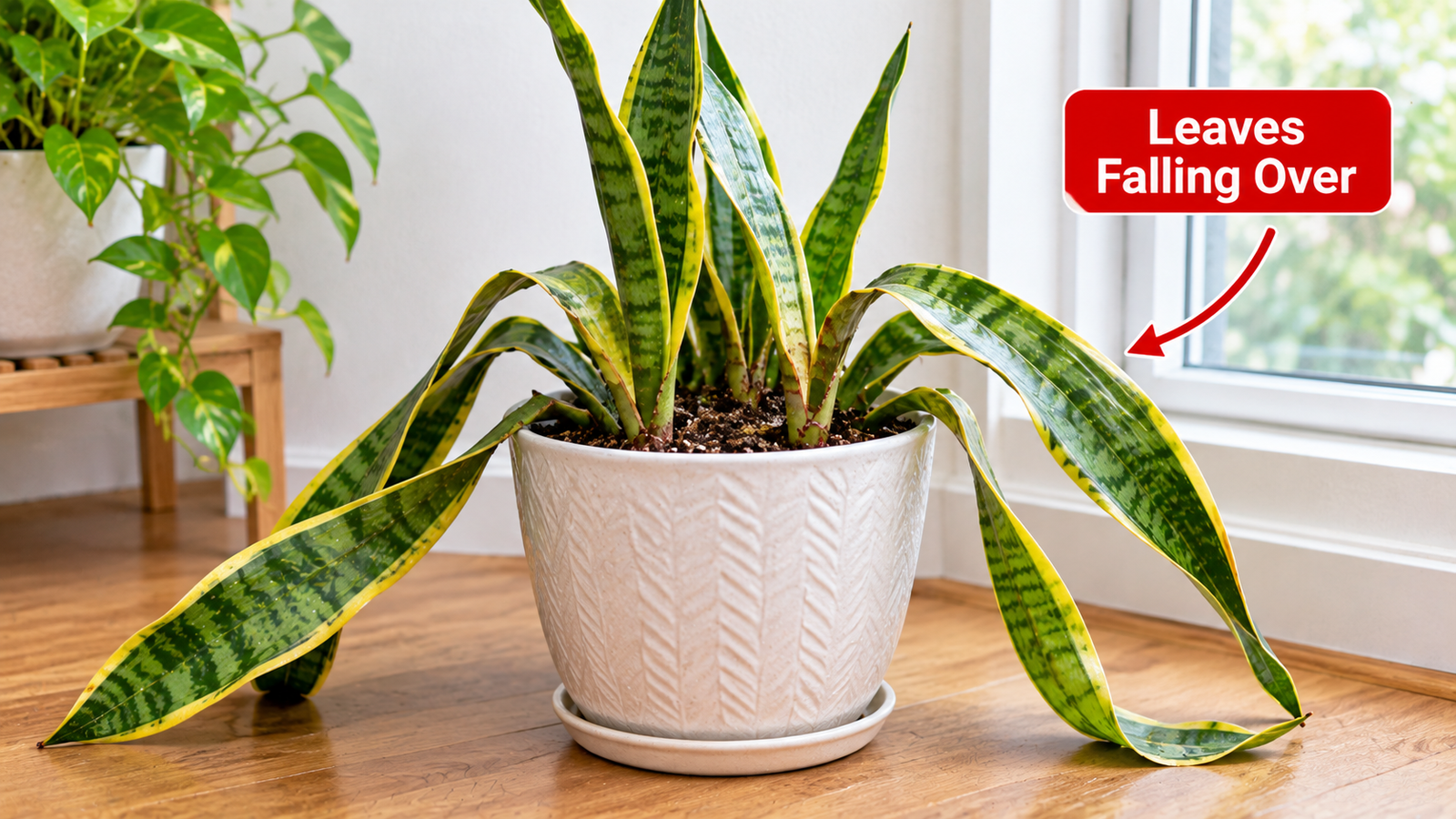
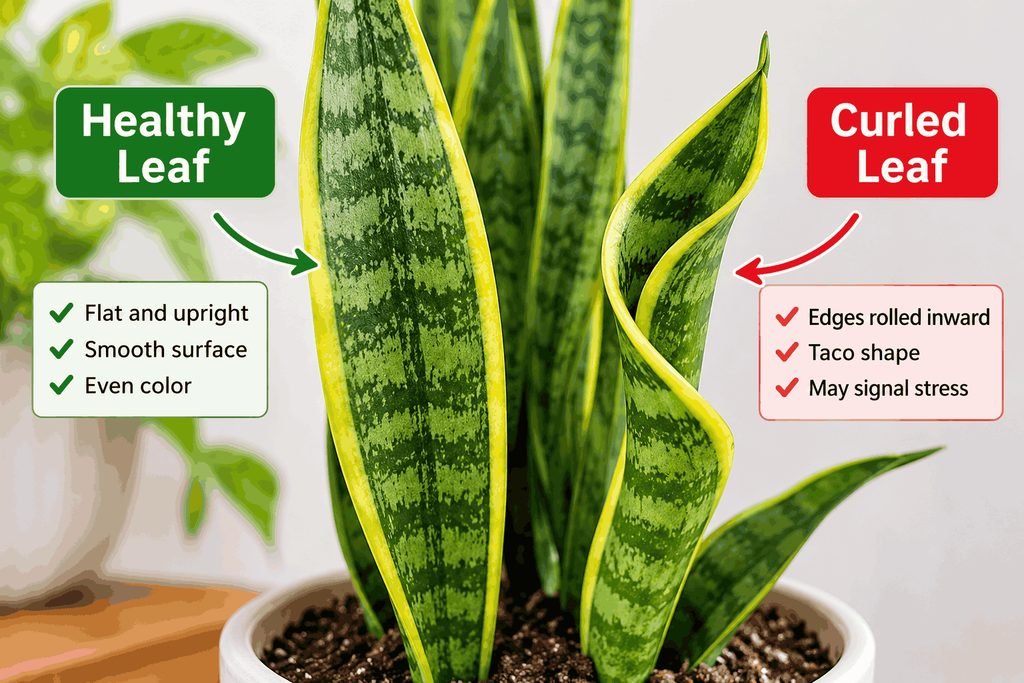
Snake plants store water in their thick leaves, and that water keeps them stiff and upright. If the soil stays dry for too long, the leaves slowly lose water, become thin and wrinkled, and curl inward along their length, a bit like a taco. The soil is bone dry, may pull away from the edge of the pot, and the pot feels very light.
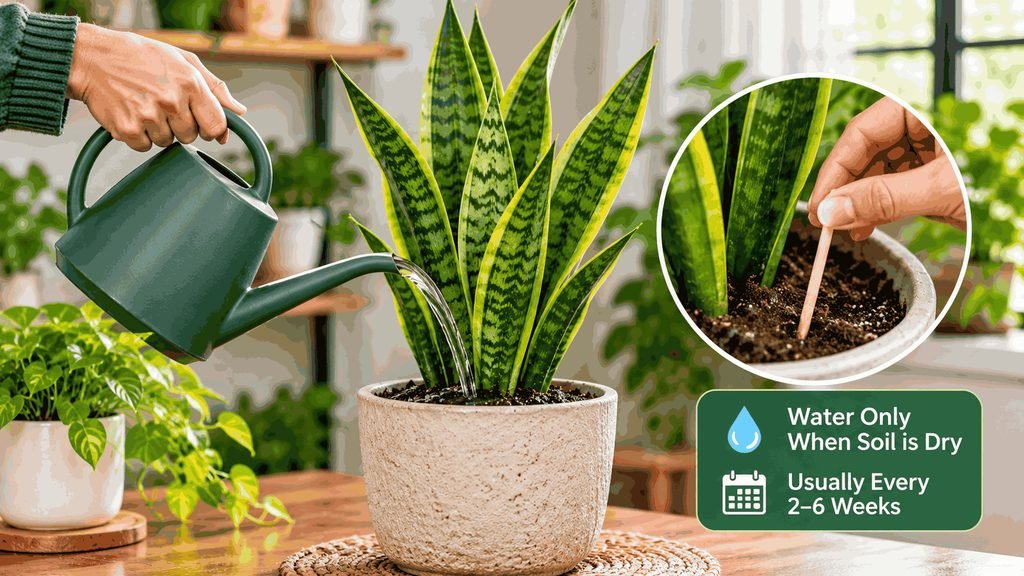
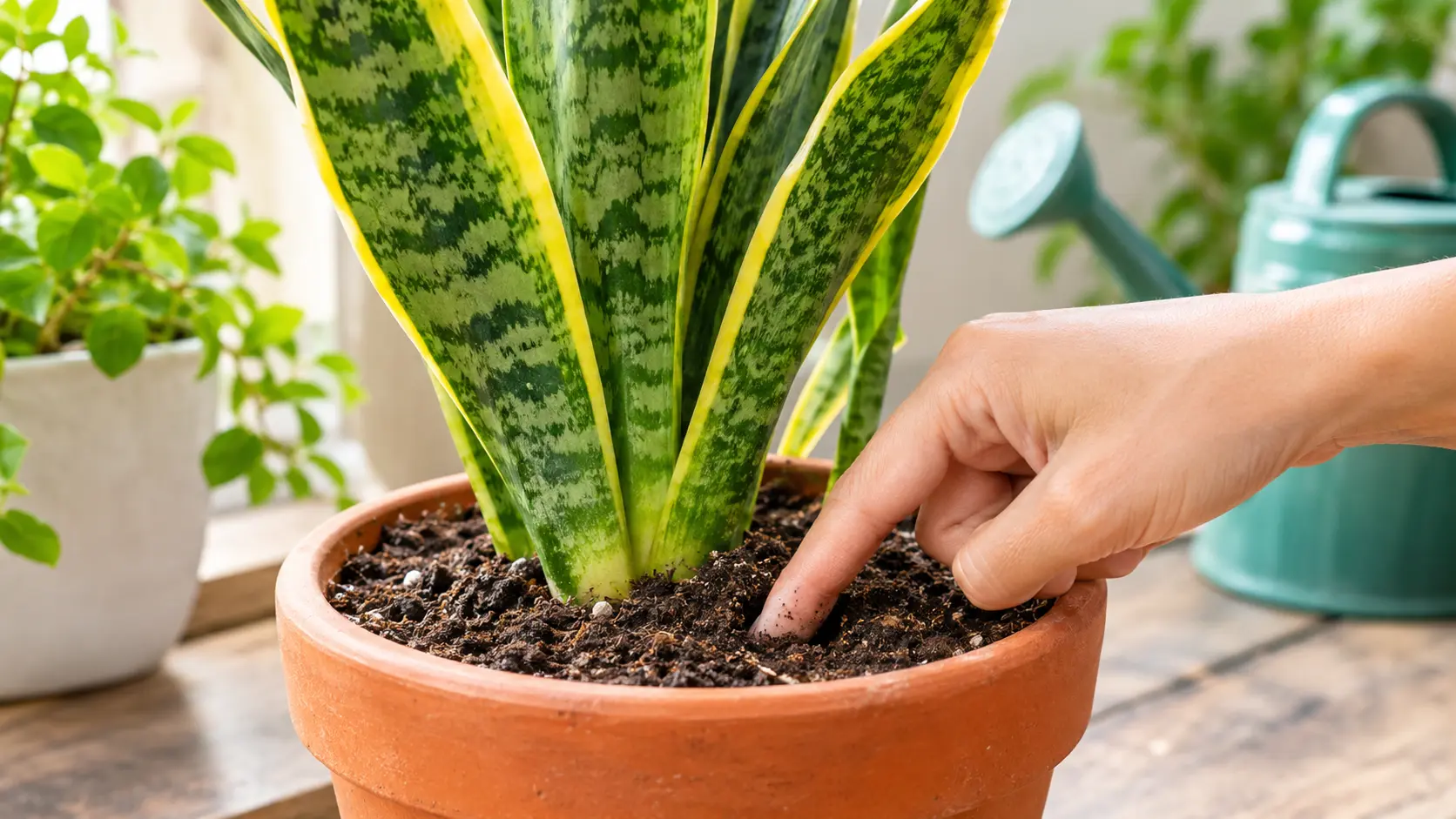
What to do: Water thoroughly until water runs out of the drainage holes, or set the pot in a few inches of water for 20 to 30 minutes and let it drain fully. Then go back to watering only when the soil is completely dry. Do not overcorrect by watering often, because overwatering is a much bigger risk for this plant. Our guide on How Often to Water a Snake Plant shows a simple soil test.
2. Overwatering and Root Rot
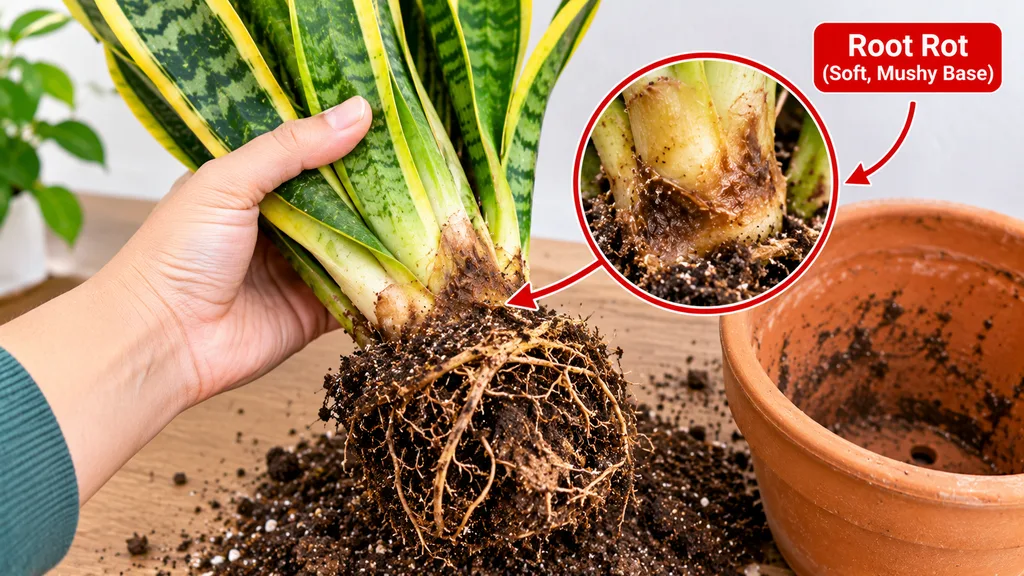
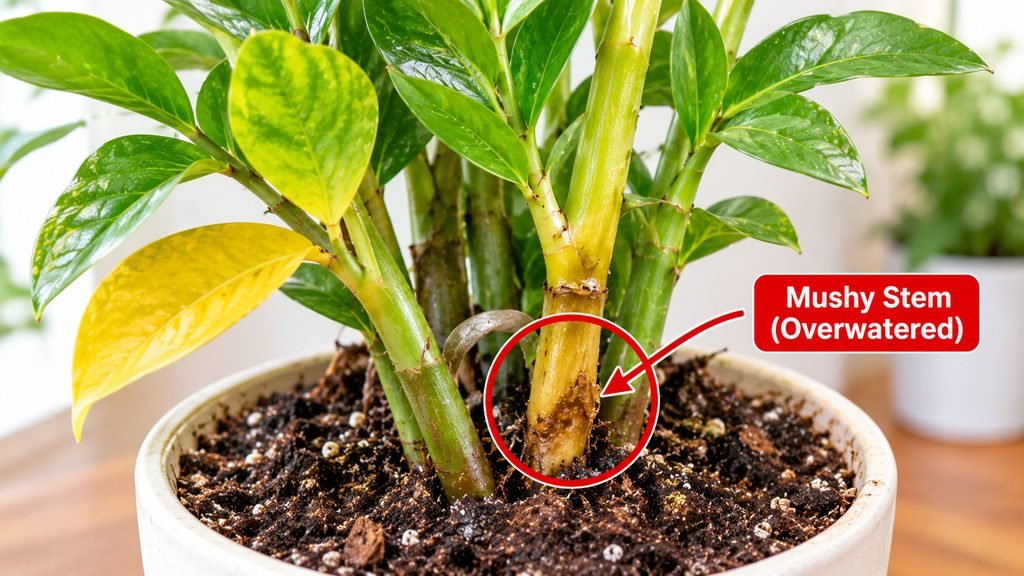
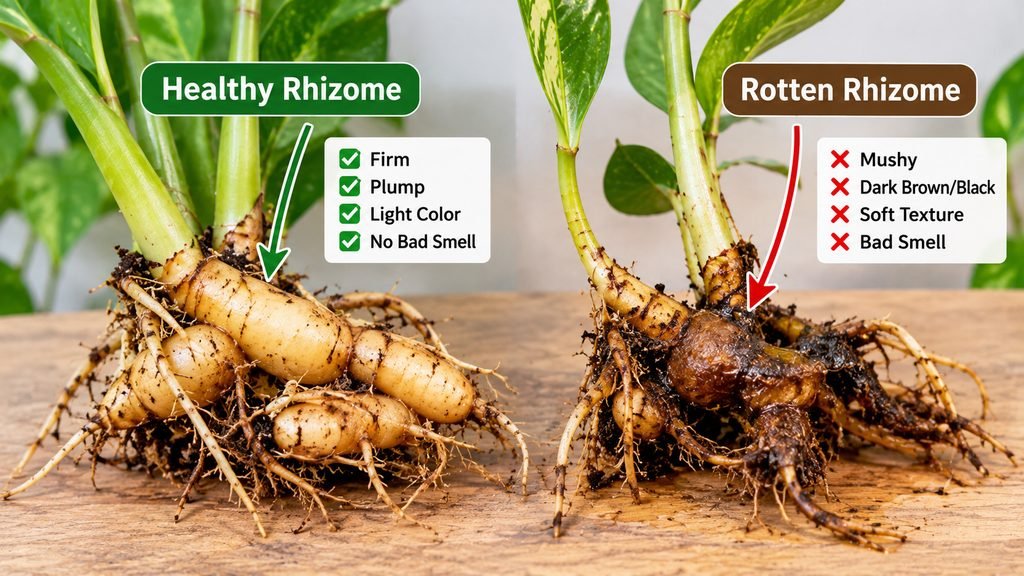
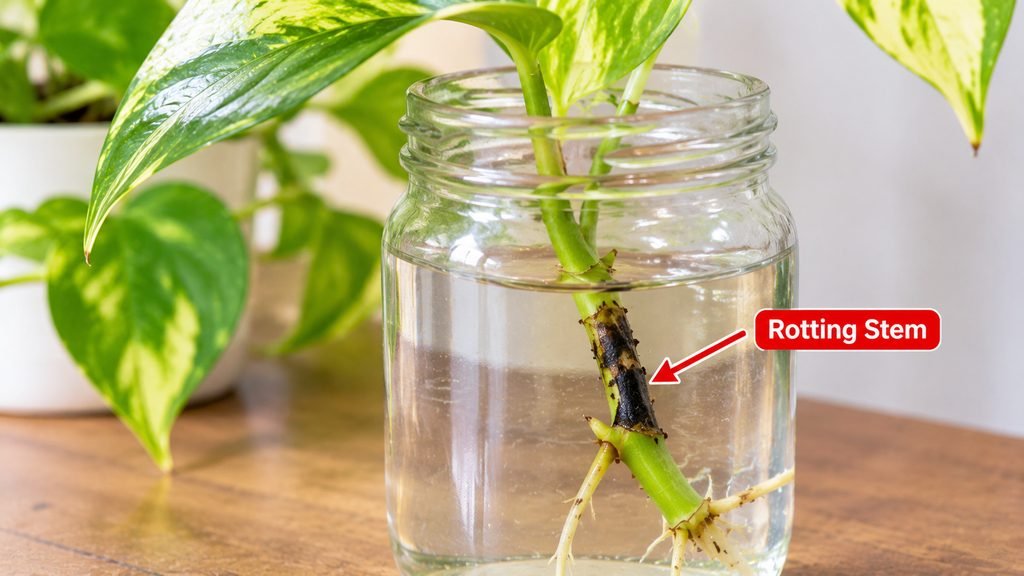
Underwatering and overwatering can both cause curling, which is why people get confused. The difference is the feel. With overwatering, the soil is wet, the base of the leaves feels soft and mushy, and you may see yellowing and a bad smell. The waterlogged roots rot and can no longer feed the leaves.
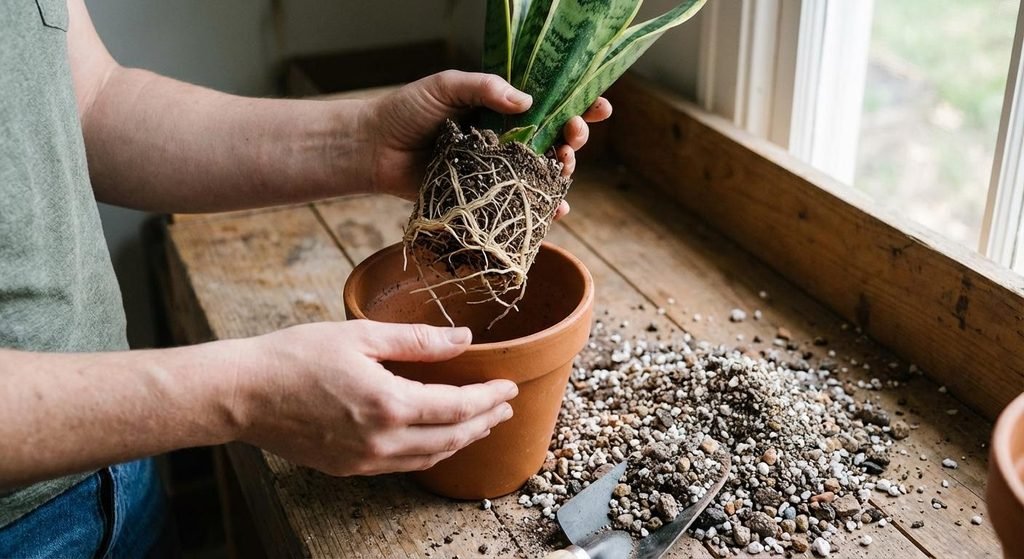
What to do: Stop watering. Take the plant out of its pot and look at the roots. Healthy roots are firm and light. Rotten roots are brown or black, soft and smelly. Trim the rotten parts, repot in fresh, fast-draining mix in a pot with drainage holes, and wait a week or more before watering. See our guides on How Often to Water a Snake Plant and Snake Plant Leaves Falling Over for more.
3. Too Much Direct Sun and Heat
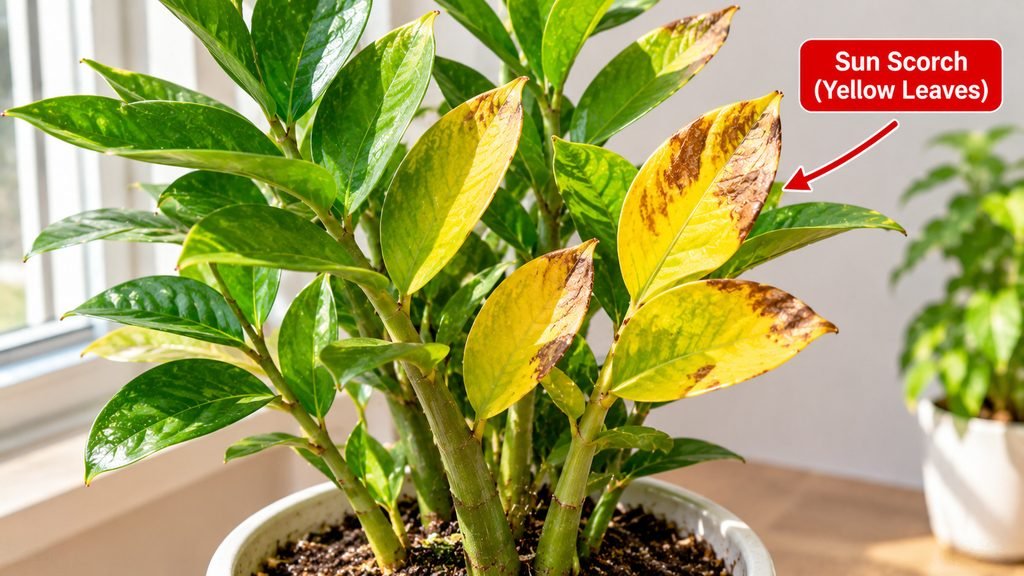
Snake plants handle bright light, but long hours of strong, hot sun through glass can stress the leaves. They may curl, develop bleached or yellow-brown patches, or get crispy edges. also advises protecting snake plants from hot afternoon sun.
What to do: Move the plant to bright, indirect light, or filter the sun with a sheer curtain. If you want to move it into more light, do it gradually.
4. Cold Temperatures and Drafts
Snake plants are tropical and dislike the cold. Temperatures below about 50°F (10°C), cold windows in winter and drafts from doors or air-conditioning vents can leave leaves soft, curled and damaged. Winter falls in different months depending on where you live, roughly December to February in the Northern Hemisphere and June to August in the Southern Hemisphere.
What to do: Move the plant to a warmer spot, away from cold glass and vents, and water less in cold weather.
5. Pests
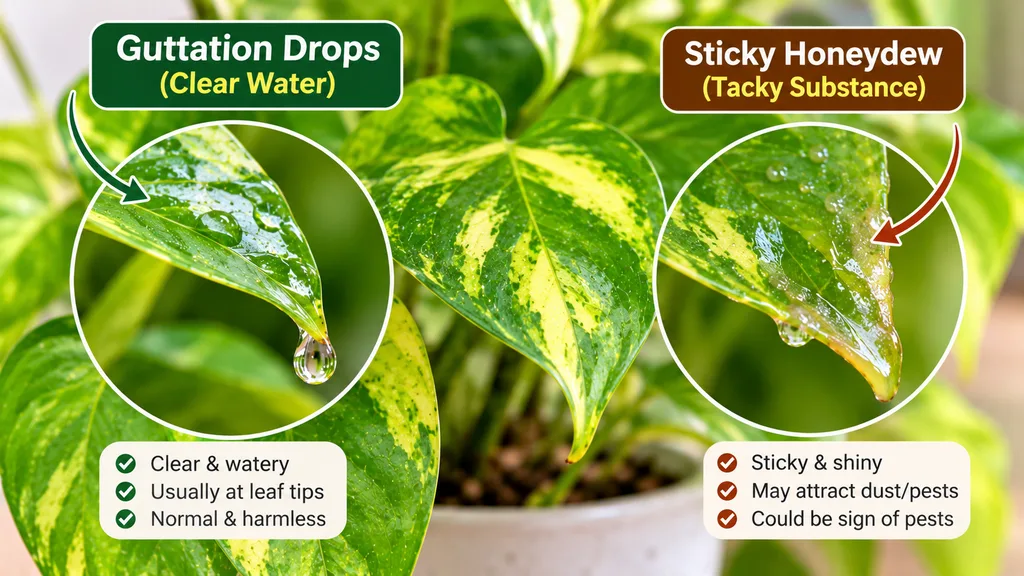
Pests such as thrips, mealybugs, spider mites and scale feed on the plant and can cause curling and distortion. Thrips and similar pests often cause twisted or distorted new leaves with silvery streaks. Mealybugs leave white, cottony clusters, spider mites leave fine webbing, and scale looks like small brown bumps. Many of them leave a sticky residue.
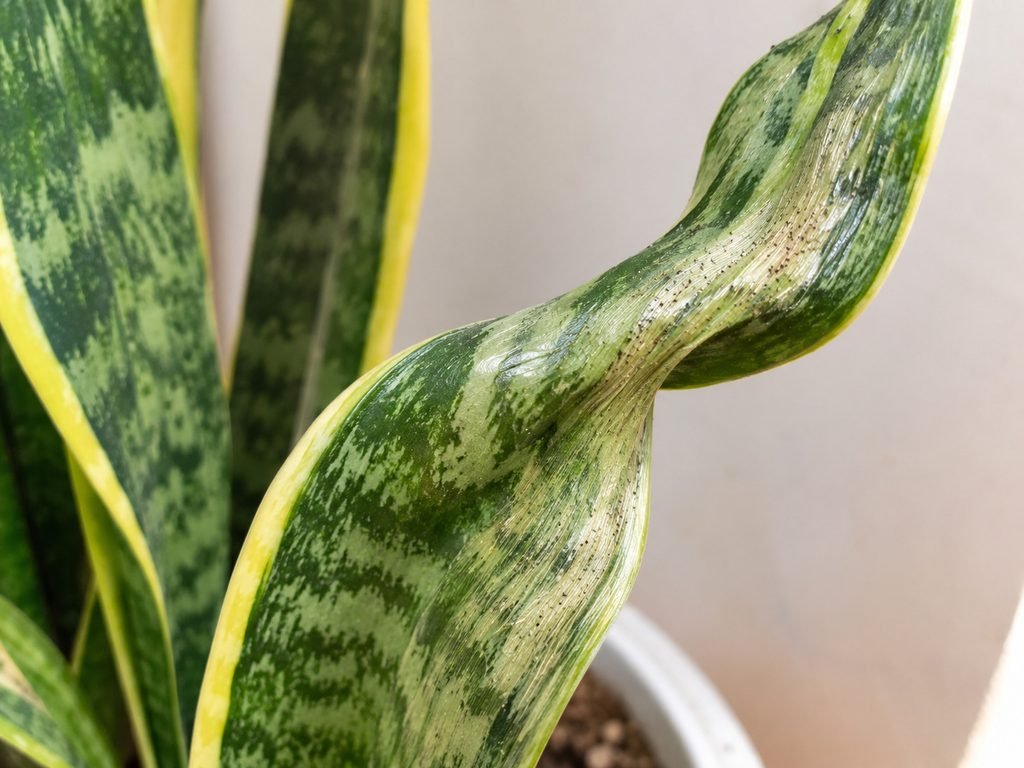
What to do: Isolate the plant. Wipe the leaves with a damp cloth, check the undersides and the base, and dab small clusters with a cotton swab dipped in rubbing alcohol. If the infestation is severe, follow the instructions on a product made for houseplants.
6. A Root-Bound Plant
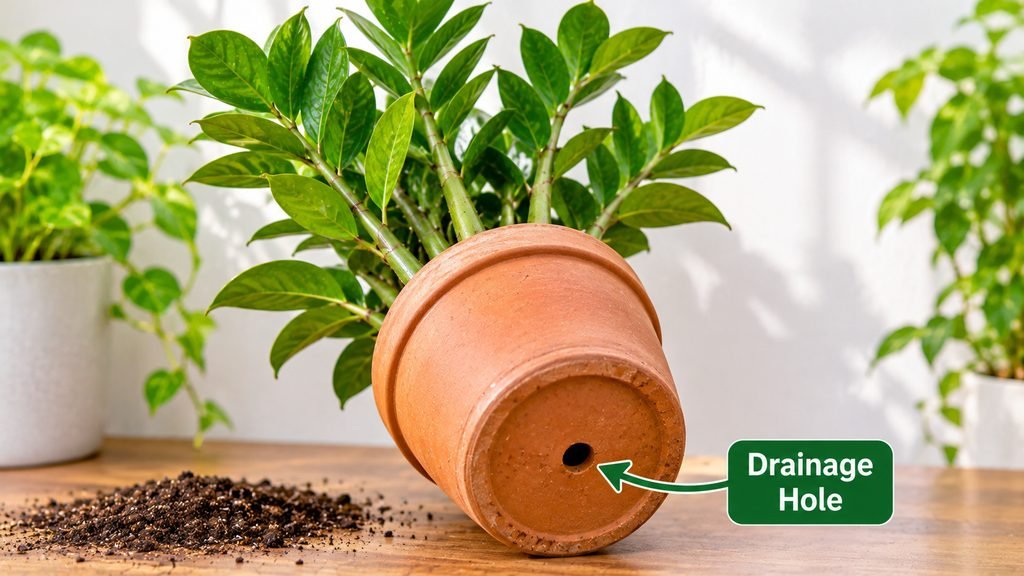
Snake plants like to be snug, but if roots have filled the pot completely, the plant struggles to take up water, and the leaves can curl. Signs include roots coming out of the drainage holes, a bulging or cracked pot, and water running straight through.
What to do: Repot into a pot only slightly bigger, about 1 to 2 inches (2.5 to 5 cm) wider, with fresh, fast-draining mix. Snake plants usually need repotting only every few years. See the repotting steps in our Snake Plant Care guide.
7. Too Much Fertilizer
Snake plants need very little feeding. Too much fertilizer builds up salts in the soil and can burn the roots, causing curling, brown edges and sometimes a white crust on the soil.
What to do: Flush the soil with plenty of water so it drains freely, and stop feeding for a while. When you do feed, follow the label, use less rather than more, and only in spring and summer.
8. Moving or Repotting Stress
A newly bought plant, or one that was just moved or repotted, may curl a little while it adjusts to new light, temperature and soil. A pot that is too big, or fresh soil that stays wet, can also lead to problems after repotting.
What to do: Keep conditions steady, do not overwater, and give the plant a few weeks to settle.
How to Fix Curling Snake Plant Leaves, Step by Step
Change one thing at a time so you know what helped.
- Check the soil. Bone dry points to underwatering. Wet points to overwatering or poor drainage.
- Feel the base of the leaves. Soft and mushy means rot. Firm and thin means thirst.
- Look at how the leaf is curling. Inward and wrinkled suggests thirst or sun. Twisted and distorted suggests pests.
- Inspect for pests. Check the undersides of leaves, the base and the soil surface.
- Check light and temperature. Look for harsh afternoon sun, cold drafts or a very dark spot.
- Check the roots and pot. If roots are coming out of the holes, or the soil smells bad, take the plant out and look.
- Fix the cause, then wait. Recovery is slow. New, straight leaves are the real sign that it worked.
Will Curled Leaves Straighten Out?
Leaves that have only just started to curl from thirst may firm up and flatten partly after a good soak, but leaves that have curled for a long time or are damaged rarely go back to normal. The plant will produce new, straight leaves once the cause is fixed.
Do not cut off snake plant leaves curling slightly if they are still green and firm, because they still feed the plant. Remove a leaf only if it is dry and crispy, soft and mushy, or badly damaged. Cut it at the soil line with clean scissors, and keep trimmings away from pets, because snake plants are toxic to cats and dogs.
How to Prevent Curling Leaves
The best way to prevent snake plant leaves curling is to get watering, light and temperature right. These habits help:
- Check the soil and water deeply only when it is completely dry.
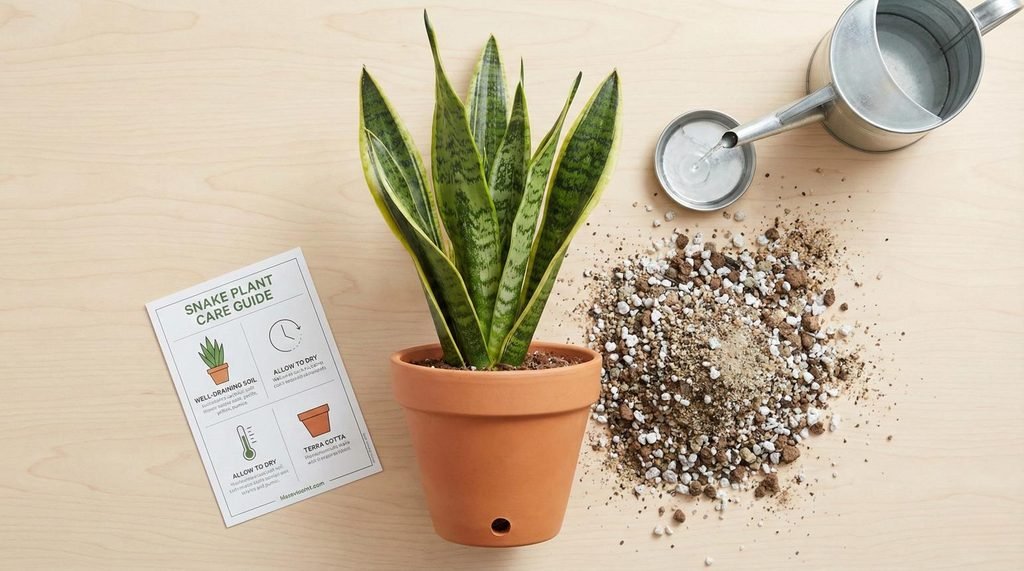
- Use a pot with drainage holes and a fast-draining mix.
- Give bright, indirect light and avoid hot afternoon sun through glass.
- Keep the plant away from cold drafts, and water less in winter.
- Feed lightly, if at all.
- Check the leaves and soil for pests once a month.
- Repot every few years or when the plant is crowded.
Frequently Asked Questions
Why are my snake plant leaves curling inward?
Most often because the plant is thirsty. The leaves lose water and roll inward along their length. Check that the soil is completely dry, then water deeply. Strong sun and heat can cause the same look.
Why are my snake plant leaves twisting?
Twisted, distorted new leaves often point to pests, such as thrips. Look for silvery streaks, sticky residue or tiny insects. Some varieties, such as ‘Twister’, are naturally twisted.
Why are my snake plant leaves curling and drooping?
Curling with soft, drooping leaves usually points to overwatering and root rot, or cold damage. Check the soil and the base of the leaves. Curling with thin, wrinkled leaves points to thirst.
Why are my snake plant leaves curling after repotting?
Repotting can stress the plant and damage roots. A pot that is too big or soil that stays wet can also be a cause. Keep conditions steady and wait for the soil to dry before watering again.
Can I save a snake plant with curled leaves?
Often, yes, as long as the roots and underground stem are healthy. Fix the cause and wait for new, straight growth.
Final Thoughts
Snake plant leaves curling is a message, not a death sentence. Start with the soil and the base of the leaves, then look at the way the leaf is curling, and check light, temperature, roots and pests. Fix one thing at a time and watch for new, straight growth.
Related reading: How Often to Water a Snake Plant, Snake Plant Leaves Falling Over, Snake Plant Leaves Turning Yellow and Snake Plant Care